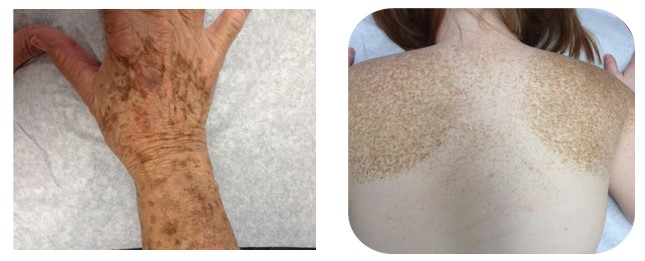
Hyperpigmentation is a common dermatologic concern where areas of skin become darker due to excess melanin — the pigment that gives skin its color. Although harmless, it can be persistent and affect confidence.
Discoloration may appear as brown, gray, or patchy areas and often reflects the skin’s response to inflammation, hormones, sun exposure, or injury. Successful treatment depends on identifying the cause rather than simply lightening the surface.
Why Pigment Depth Matters
Pigmentation disorders are defined not only by their appearance but by how deep the pigment sits in the skin. Pigment may be located in the epidermis (superficial layer), dermis (deeper layer), or in both layers (mixed pigmentation).
Understanding this depth is essential — it determines which treatments will work, how quickly improvement occurs, and why some discoloration may respond slowly or incompletely to therapy.
- Epidermal pigment – usually responds well to topical treatments and gentle procedures
- Dermal pigment – deeper, more stubborn, and often requires advanced therapies
- Mixed pigment – requires combination treatment and careful management
Because two spots that look similar on the surface may exist at completely different depths, treating all pigmentation the same way can lead to poor results or recurrence.
Common Causes
Hyperpigmentation can result from several different processes, including:
- Sun exposure (solar lentigines / sun spots)
- Hormonal changes (melasma)
- Acne or skin irritation (post-inflammatory hyperpigmentation)
- Heat and visible light exposure
- Medications or medical conditions
- Aging and cumulative UV damage
Each type behaves differently in the skin and requires a targeted treatment strategy — especially in darker skin tones where aggressive treatment may worsen discoloration.
Why Professional Evaluation Matters
A proper diagnosis identifies both the type of pigment and its depth, which guides safe and effective therapy. Some forms respond to medical-grade skincare, while others require chemical peels, lasers, or light-based treatments. Without determining depth, treatment may be ineffective or even worsen pigmentation.
At Aesthetics and Medical Lasers of Colorado, we evaluate pigmentation scientifically — identifying triggers, skin type, and pigment depth — to design a customized plan that restores a clearer, more even complexion while protecting long-term skin health.
If you notice new dark spots, worsening patches, or discoloration that does not improve with over-the-counter products, a professional assessment can help determine the cause and the safest treatment options.